
🤔 | Factories are Good
64% miss: what a million frequent flyer miles tell ... and what the establishment media is not saying.

Welcome new subscribers and THANK YOU to those who $upport my independent writing and advocacy.
“The wealth of a nation consists in the abundance of its productions.” — Alexander Hamilton
In the 1990s, as the United States was dismantling its manufacturing base and chasing globalization, it was my job to visit many, many factories around the world. As a Fortune 500 manufacturing executive with operations spanning Latin America, Turkey, Australia and various emerging markets, I earned one million frequent flyer miles before my 30th birthday. While America was watching its factory floors go dark, I was embedded in a team that was turning on the lights in the rest of the world.
That experience gave me something most economic commentators do not have: I walked the floors, entered the clean rooms, understood the water filtration requirements, was made aware of the environmental issues. I prepared the financial analysis that determined whether a plant got built or an existing one was expanded. Beyond manufacturing itself, I have seen what factories do to communities. I have watched, up close, what happens when a plant arrives … and what happens when it leaves.
What Factories Actually Do
The obvious part is the jobs. Assembly lines employ many people. A steady paycheck gives stability to a home. Workers with ambition become supervisors, superintendents, managers and beyond. The factory floor is one of the few places left in the modern economy where someone without a college degree can build a genuinely middle class life through consistent work and demonstrated competence.
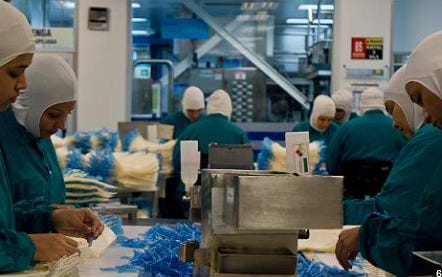
Less obvious but equally impactful is the ancillary economy a factory generates: procurement vendors, catering businesses, cleaning services, machine shops, car fleets, and service providers of every description that exist because of the factory. The prosperity a manufacturing operation brings to its surrounding community extends far beyond the workers inside it. I have seen this in country after country. It is not a theory but a well understood pattern.
There is also something harder to quantify but real nonetheless. When the product you had a hand in making appears on a shelf or enters the marketplace, there is a quiet satisfaction that the service economy simply cannot replicate. In our case, the products we made saved lives. I know the pride that comes when you had a hand in making something of value.
What Made Factories Pencil Out
In my experience, factories and expansions happened for three reasons. Demand justified the investment. Local governance offered benefits like tax exemptions or breaks. Or the cost of importing became too expensive to sustain. I cannot count the cost benefit analyses and financial justifications I prepared for the C suite to evaluate million plus dollar investments. Import tariffs levied on our products many times ended up being precisely what justified the capital investment to manufacture locally.
That last point is worth sitting with. Tariffs are not simply a tax on imports. They are a government mechanism that redirects economic policy. Tariffs change the math on the spreadsheet that determines whether a factory gets built or a product continues to be imported. I know this not because I read it in an economics textbook but because I ran those numbers myself, for real brick and mortar, in real communities, watching real decisions get made based on them.
This is what the critics of Trump’s tariff policy consistently miss. They argue from theory that says tariffs raise prices and distort markets. What I know is that tariffs change investment decisions and factories get built. Hamilton knew this in 1791. I confirmed it personally across one decade and more than a million miles of travel.
What the Numbers Are Saying
The expert forecast for U.S. job growth in June was 105,000 jobs. The actual number came in at 172,000 — a 64 percent miss. During the Biden presidency, jobs numbers were routinely revised downward after the initial headline had served its purpose and the media moved on without correction. Trump’s numbers are being revised upward. March was revised up by 29,000. April by 64,000. The two-month combined revision was 93,000 jobs higher than first reported.
Unemployment is holding at 4.3 percent. The overall U.S. trade deficit fell by $700 million in April to $55.9 billion, better than market expectations. The goods deficit fell by an even stronger $2.4 billion.
But here is the detail that matters most and receives the least attention. Capital goods excluding automobiles now account for roughly 42 percent of all U.S. goods imports — the highest share on record. These are not trinkets flooding discount store shelves. These are machines, equipment, tools, components and production inputs. America is importing the infrastructure of future manufacturing. It is buying the equipment to build the factories that will produce the goods it currently imports.
In plain English, the composition of trade is moving in exactly the right direction. Exports of goods and services hit a record $327.1 billion in April. Goods exports alone reached a record $221.3 billion. America’s petroleum trade surplus hit a record $17.7 billion. Industrial supplies, capital goods and petroleum exports all showed major strength simultaneously.

Peter Navarro is the Senior Counselor for Trade and Manufacturing to U.S. president Donald Trump since January 2025
The media will not explain why these numbers matter or how they were achieved. The government plays a significant and intentional role in protecting American producers and the American workforce from the theoretical magic of the free marketplace. Tariffs, tax policy and directed investment are the tools of the American System that Hamilton espoused, building this country into the greatest industrial power in history. Much to our detriment and in the name of an economic philosophy that served the City of London rather than the factory floors of Michigan and Ohio, Hamiltonian economics were later abandoned. Were it not for the Trump agenda, we would remain at the mercy of a global supply chain that can be cut by pirates on a speedboat terrorizing maritime vessels.
What I Know From the Floor
Having justified the numbers and experienced the downstream of a corporate decision to break ground, I know that factories are good. The experts missed June’s jobs number by 64 percent. The revision trend is running consistently positive. The trade composition is shifting toward investment rather than consumption. The petroleum surplus is a strategic weapon as much as an economic indicator.
This is what Make America Great Again looks like when it moves from slogan to spreadsheet. It is not magic but math and the math is starting to work.
A nation that cannot make what it needs will not remain sovereign.
Henry Clay - 7th Speaker of the House
Heavenly Father,
We pray for steady paychecks that give stability to homes and for ambition based on competence. Grant us the restoration that has been promised and the dignity that comes from making something real.
We pray for the communities that lost their anchoring industry and are watching the math begin to change again. May those ecosystems rebuild faster than the economists predict and last longer than the political cycles that made them possible.
We pray for the policymakers making the decisions that determine whether factories get built or products get imported. May they be guided by love for people and country, and not by their personal gain.
We pray with gratitude for the dignity of making things. That dignity was taken from too many Americans for too long. May its return be as permanent as the philosophy that produced it.
In Jesus’ name, Amen.

🤑 | The Not So Invisible Hand

Praying Mantis is a reader-supported publication. If you appreciate my insights and prayers, please consider becoming a free or paid subscriber.
So refreshing to read an article by someone who is not an economic illiterate! Well written s always.
Perhaps we have become numb to the economic numbers that we are told every month, after witnessing so many years of lies and obfuscations. It would be such a relief to trust what our government tells us, but even in the Trump era it's smart to be skeptical. Still, the trend line is encouraging.